medium
Glass
Cast glass behaves like nothing else the house handles. It carries weight and light in the same gesture, and it records the mould it came from, which means a kiln-cast piece keeps a texture no amount of polishing would improve.
What kiln-casting actually involves
A maker builds a model, takes a refractory mould from it, and fills that mould with glass in a kiln that then cools over days or weeks. The cooling is the hard part. Glass shrinks as it drops through its annealing range, and if the outside sets before the inside has finished moving, the piece locks stress into itself and cracks, sometimes months after it leaves the studio.
That is why a large cast is a test of patience more than of nerve. A piece the size of the works in this collection can spend a fortnight in a kiln that nobody is allowed to open. Rushing the schedule by a day is the difference between a finished work and a bin.
What the house looks for
The house judges cast glass on four things, in this order:
- A clean pour. Cold seams, where two flows of glass met and failed to fuse, show as faint lines under raking light and never come out.
- A complete anneal. The house checks for stress with polarised light before a piece is accepted, because internal stress is invisible until it is a crack.
- Deliberate surface. A maker who leaves the mould texture on the glass should be able to say why. So should a maker who polishes it off.
- Honest inclusions. Bubbles and veils are part of casting. The house records them rather than pretending the piece is optically perfect.
Work that passes is authenticated, appraised, and issued a Mount Qaf Certificate recording the maker, the edition, the materials, and the value the house has set. The full acceptance criteria sit on the Standard.
Living with a cast glass work
Glass is the least static material in the house. A piece reads dense at midday and hollow at dusk, and the same work will look different against a window than against a wall. Place it where light moves across it during the day rather than where a single lamp holds it still.
Cast glass is heavier than it looks and wants a surface that will not flex. Clean it with a dry cloth. Cast surfaces hold dust in their texture, which is a feature of the material rather than a fault in the piece.
In this collection
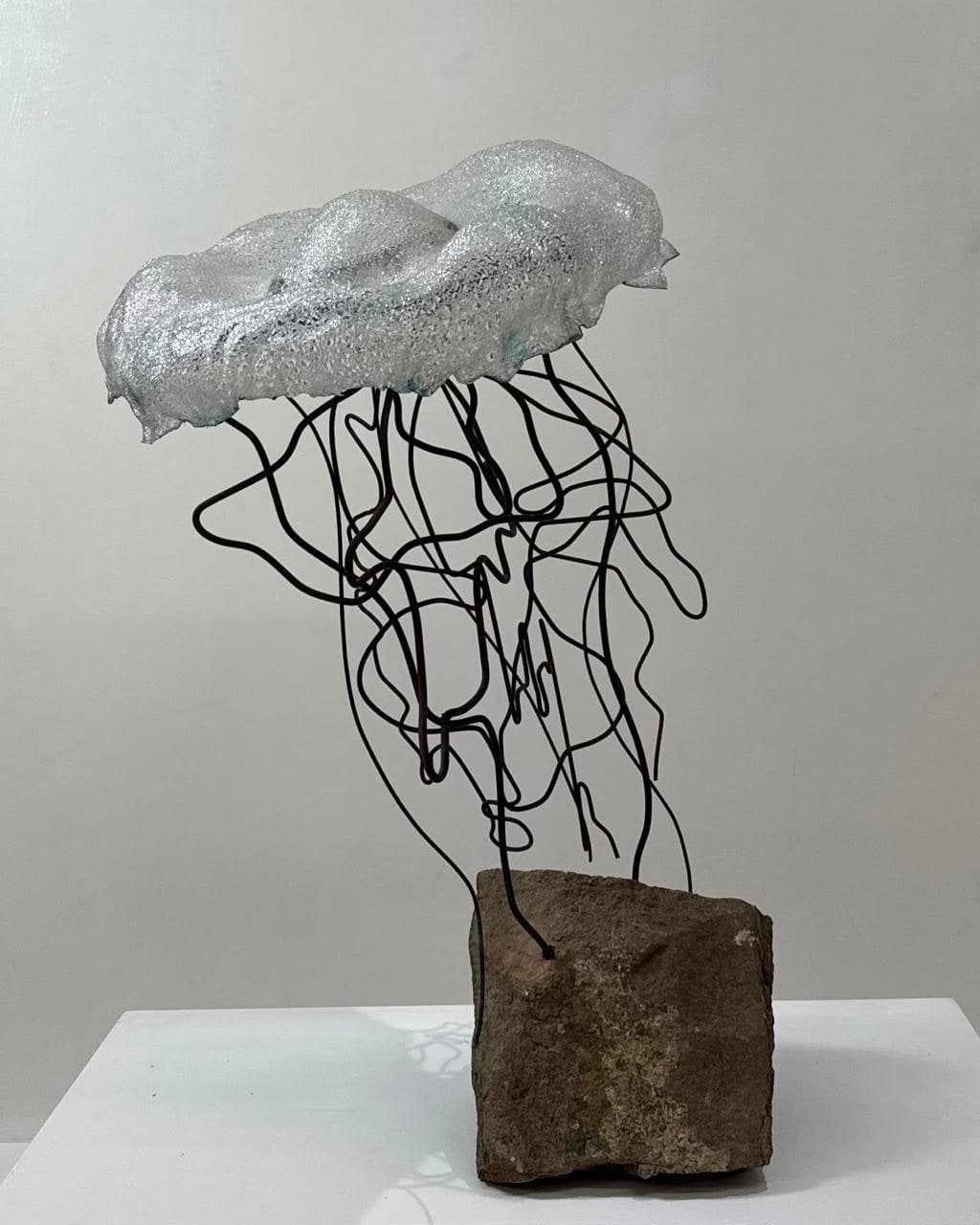
Floating Jelly is the clearest example of what the house means by a deliberate surface: the maker left the mould texture on the bell and hung the whole mass on hand-bent steel above a salvaged stone. See it alongside the rest of the works, or read how the house arrives at a value on the collectors page.