What a Certificate of Authenticity Actually Proves
Ask ten galleries for a certificate of authenticity and you will get ten different documents. Some are a single line on headed paper. Some are a photograph stapled to a signature. A few are genuine records. The word certificate does almost no work on its own, and a buyer who treats one as proof without reading it is trusting the paper rather than the claim.
What a certificate is for
A certificate exists to answer three questions long after the sale, when the gallery may be gone and the maker may have died.
- Who made this, and is that verifiable by someone other than the seller?
- What exactly is it? Material, dimensions, and where it sits in an edition.
- What has it been worth, and who said so?
A document that answers only the first question is an attribution, not a certificate. Most of what circulates in the market is an attribution.
The failure modes
Certificates fail in predictable ways, and all of them are easy to check before buying.
It is signed by the seller alone
A signature from the person selling you the work proves that they are willing to sign. If the seller and the authenticator are the same party with no separate record, the certificate carries exactly as much weight as the seller’s reputation and no more.
It describes the work too loosely
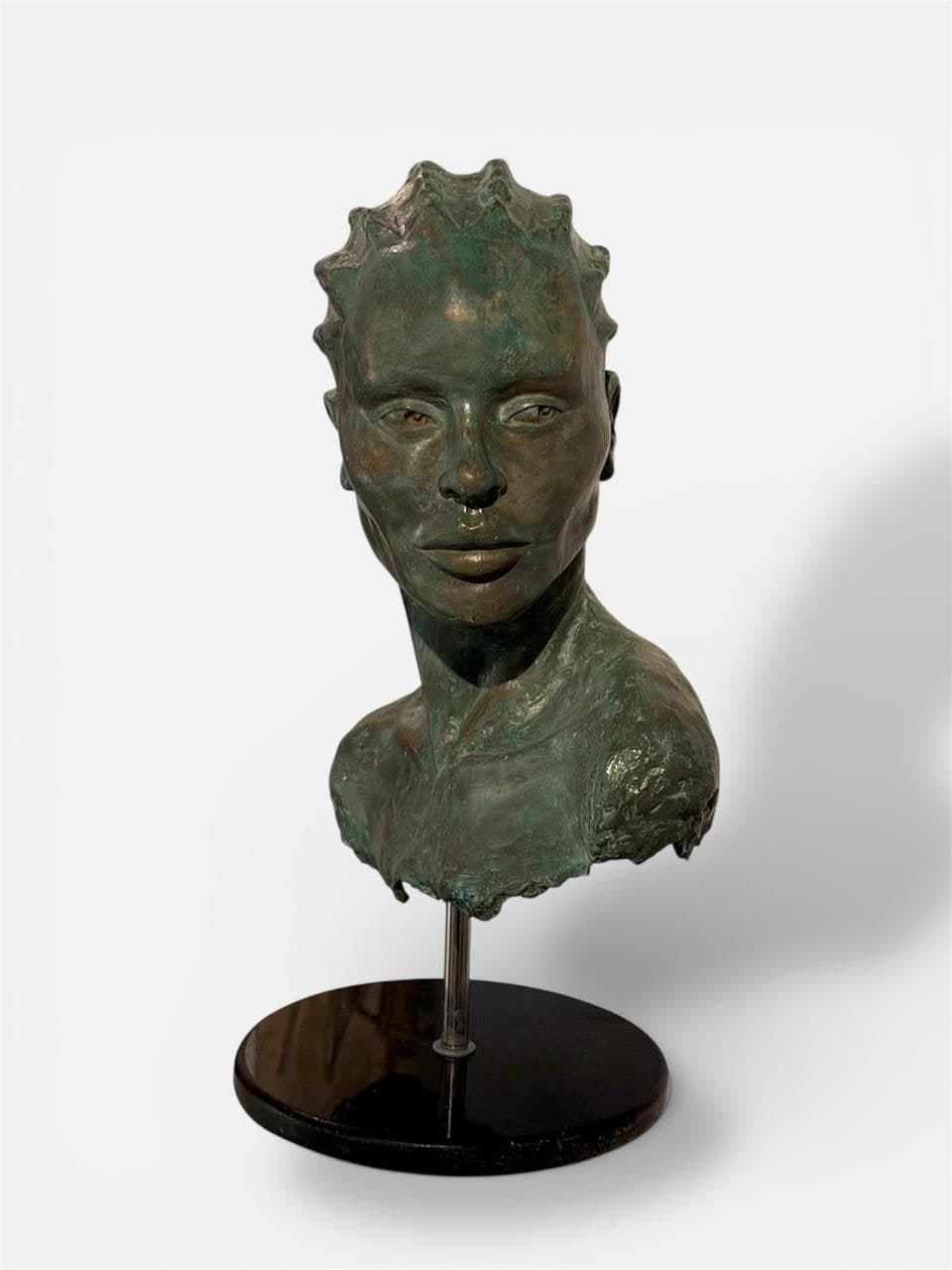
A certificate reading "bronze sculpture, signed" fits thousands of objects. One reading "cast bronze, verdigris patina, marble base, 44 x 22 x 20 cm, 2 of 6" fits one. Vagueness is not an oversight. It is what allows a document to be moved to a different object later.
It cannot be checked
A certificate that exists only as paper in a drawer has a single point of failure. If it is lost, damaged, or copied, there is no way to confirm which version is real. A record held by the issuing house and checkable against an identifier survives the loss of the paper.
It records a price and calls it a value
The number on many certificates is what someone paid, presented as what the work is worth. Those are different claims. A price is a historical fact about one transaction. A value is an assessment, and an assessment needs a method and a date attached to be worth anything.
What the house records
The Mount Qaf Certificate is issued when a work is accepted against the Standard, and it freezes the facts at the moment of issue: the maker, the edition, the materials, the date, and the appraised value the house has set.
Two properties matter more than the rest. The record is held by the house and checkable at any time on the verification page, so the paper is a convenience rather than the proof itself. And the valuation history is append-only: when the house re-appraises a work, the new figure is added and the previous one stays visible. A record that can quietly overwrite its own past is not a record.
What it does not do
An appraised value is the house’s assessment at a point in time. It can fall. Resale through the house is a service the house offers, not a guarantee that a work will make money, and any certificate implying otherwise is selling you something other than authenticity.
Before you buy anything
Ask who authenticated the work and whether they are independent of the sale. Ask what happens if the paper is lost. Ask whether the value on the document is a price or an appraisal, and if it is an appraisal, ask for the date and the basis. A seller who cannot answer those three questions is not necessarily selling a fake, but they are certainly not selling you a record.
You can see how this works in practice on any piece in the works, or read how the house arrives at a figure in the article on how art appraisal works.