Lost-Wax Bronze Casting, Explained
A bronze that arrives from the foundry is not a finished sculpture. Most of what separates a good bronze from a dead one happens after the metal has cooled, and it is all done by hand.
From wax to metal
The maker models the work in wax. The foundry builds a ceramic shell around that wax, then heats the whole assembly so the wax runs out, leaving a void in the exact shape of the model. Molten bronze fills the void. When it cools, the shell is broken away.
The shell is destroyed to release the cast, which is the detail that explains editions. Each piece in a numbered run is its own casting rather than a copy stamped from a reusable mould, and any two will differ slightly.
Chasing is where quality is decided
What comes out of the shell carries sprues where the metal ran in, seams where the shell sections met, and a surface softened by the process. Chasing is the hand work that follows: cutting back the seams, re-cutting detail the mould lost, and bringing the surface to what the maker intended.
A properly chased bronze puts highlights where light would fall on a real body. A poorly chased one reads flat and slightly swollen, as though seen through water. It is the single most reliable indicator of how seriously a piece was made, and it is visible to anyone who looks under angled light.
Check the passages that are tedious to finish. The inside of a wrist. Where a limb meets the torso. The back of a head, which a maker working to photograph well often leaves alone.
Patina is grown, not painted
A patina is a chemical film grown on the surface of the metal. Applied hot and worked back by hand, it settles into the low areas and leaves the raised ones bright, so the form reads the way a body catches light. Dipped in one pass, it covers everything at once and flattens the modelling the maker spent months building.
You can usually tell by looking at the high points. On a grown patina, the metal reads through at the places a hand would naturally touch: a cheekbone, the bridge of a nose, a knuckle. On a sprayed or dipped finish, the colour sits evenly across high and low alike, and the piece looks slightly like plastic.
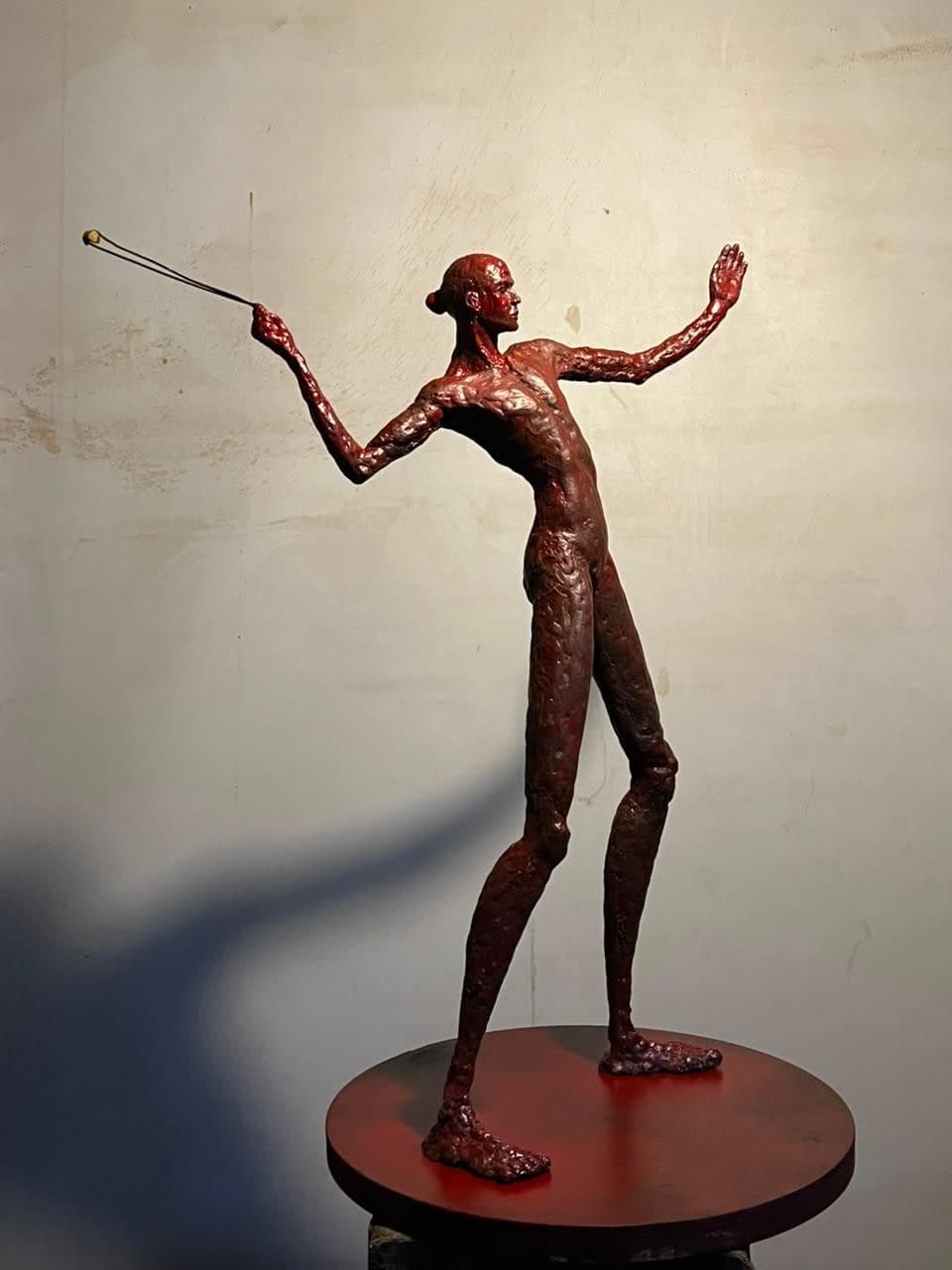
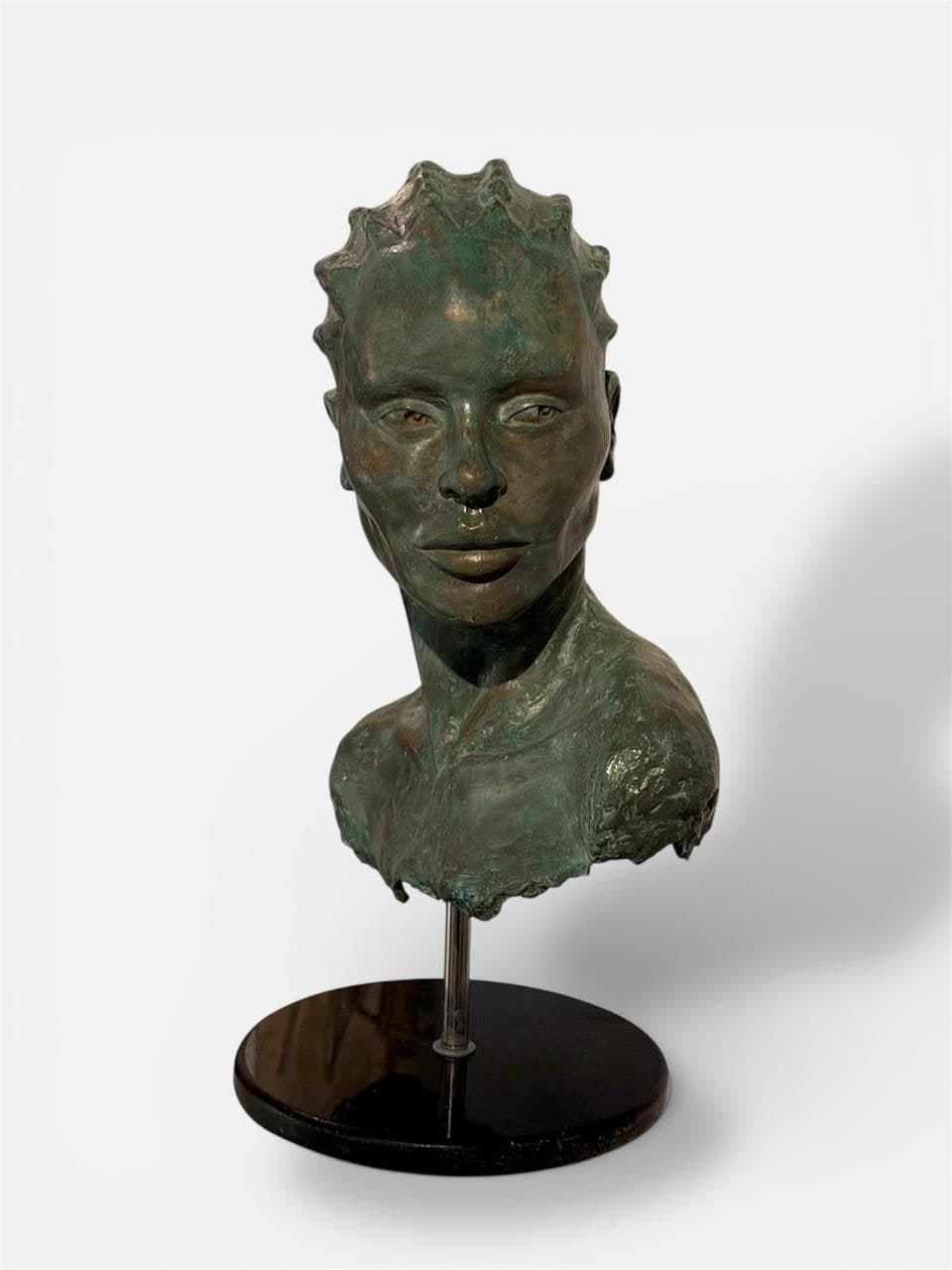
Warrior Head took months of controlled exposure to build its green, which is why copper still shows at the cheekbone. The oxblood on Freedom Throw went on hot and was cut back by hand.
Weight, and what it does not prove
Collectors often test a bronze by its weight. It is a weak test. Casts are hollow to different degrees depending on the foundry, and a heavier piece is not a better one. What weight does tell you is that you are holding metal rather than a cold-cast resin loaded with bronze powder, which is a different product sold under a confusingly similar name.
If a listing says "cold-cast bronze" or "bronzed resin", it is not a bronze casting. That is worth knowing before comparing prices.
What the certificate records
For a cast work the Mount Qaf Certificate records the alloy and finish, the edition number, and the appraised value, and the run is closed once complete. The bronze collection sets out what the house checks before accepting a cast.